
Benefits of Row Covers for Broccoli, Cabbage & Cauliflower
Row covers are a simple way to protect crops like broccoli, cabbage, and cauliflower while making the garden easier to manage. Both lightweight frost covers and insect netting garden row covers help reduce pest damage and provide weather protection for stronger, more productive plants. It’s an easy addition that has made an amazing difference in how these cool season crops perform in the garden.
Some links in this article are affiliate links and if you click on them I will receive a small commission at no cost to you.
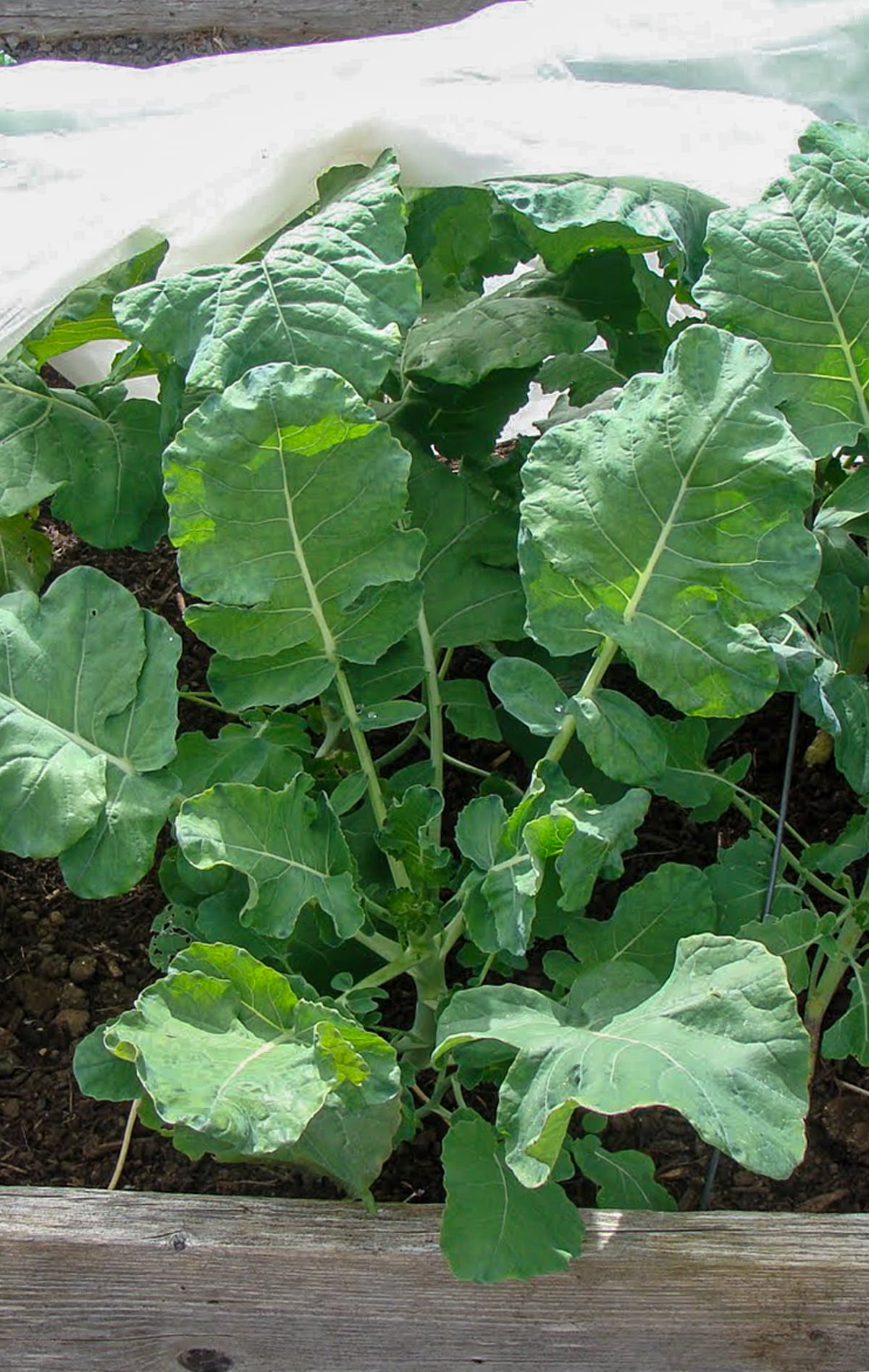
One of the things I’ve learned by trial and error in my garden is that the early spring, cool season vegetables like broccoli, cabbages, and cauliflower (known as group as ‘cole crops’ or ‘brassicas’ along with kale and others) LOVE growing under a lightweight cover. And not only for temperature regulation – using a garden row cover has been the only way I’ve been able to harvest clean broccoli at all.
The Problem with Garden Broccoli
The very first year I grew broccoli I had to throw away every single head and side shoot the plants produce because of aphids. Believe me, I tried everything to get those things off – vinegar, warm water, hot water, boiling water – but they were so thick there was no way to get them out of all the crevices in the heads.
The next year I took a chance and grew them under a light floating row cover, sometimes called Remay, or garden fabric (or frost blanket, although those are a heavier weight), to try and keep the bugs out so we could at least harvest some of the heads.
I was pleasantly surprised to find that it worked wonderfully, keeping out the aphids and the cabbage loopers (well, most of them, since I didn’t keep the edges completely sealed) and allowing us to discover the amazing taste and tenderness of home-grown broccoli (the stems are not tough at all!).
Since then I’ve always grown broccoli under a row cover. And since I grow broccoli in the same bed with cabbage and cauliflower (they’re all from the same family, brassicas) they got covered, too.
And what I discovered through this is that the plants grown under the cover are healthier, grow faster, and produce sooner than any that I plant without a cover!
How to Use Row Covers
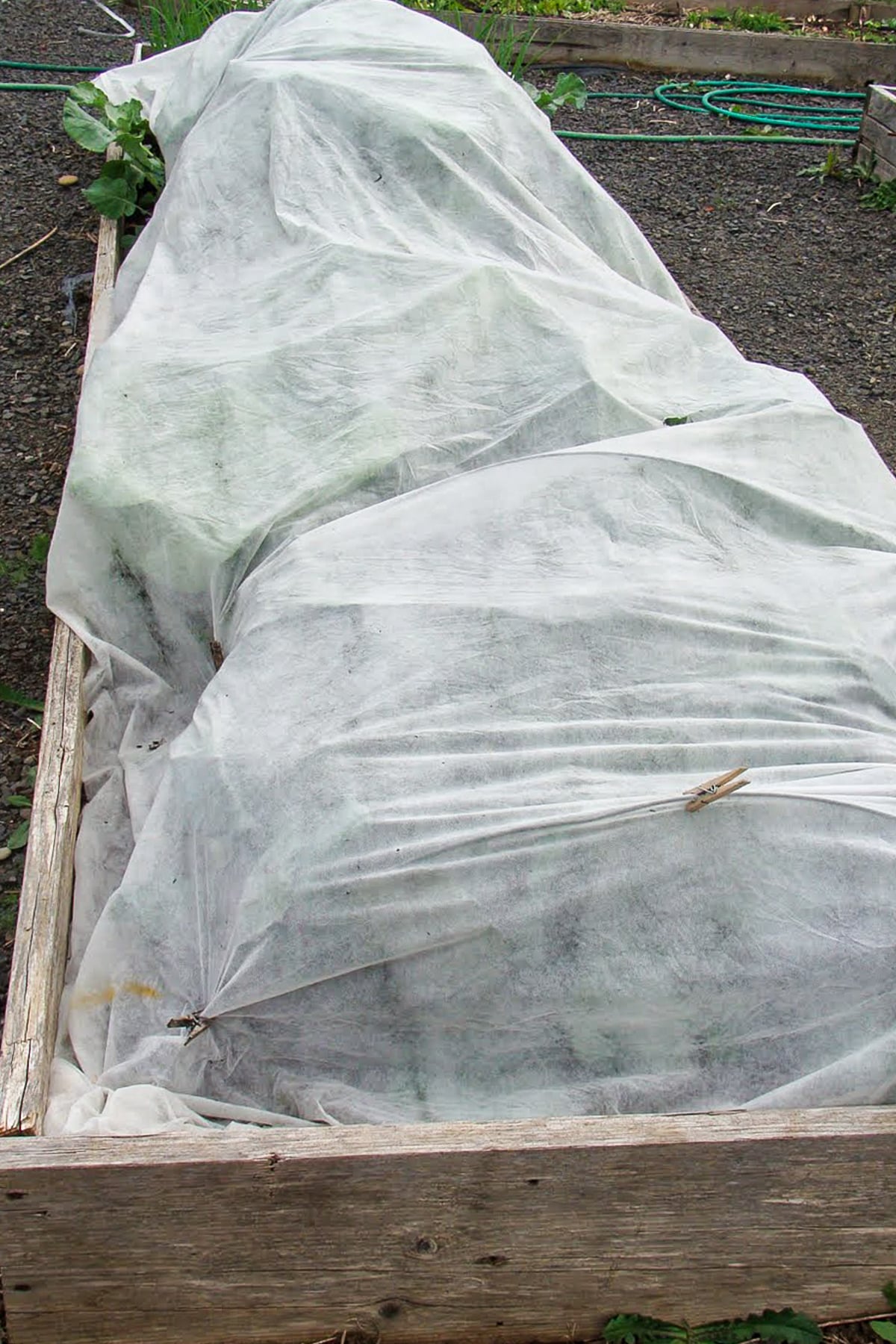
Pictured above is a 4’x12′ raised bed (from our former cottage’s garden) in mid-May planted with three sections of broccoli, cabbage, and cauliflower. Here’s how I started with the row covers:
- Plant the seedlings (these were planted in April).
- Use short portable metal hoops or bent pvc pipe inserted in the soil about 2 feet apart in the bed.
- Secure a floating row cover with clothespins or garden clips for pvc pipe on the hoops.
- Use rocks to hold the corners and edges (or you can also use earth staples to secure it).
TIP: Technically, you don’t need to use the hoops, since the fabric is light enough to rest on the plants, but my home-started seedlings are usually pretty fragile and we get a lot of hard rain in the spring, so I’ve found the hoops just give an extra advantage.
Next Steps: You can see in the photo above that the plants are outgrowing the cover, so right after this picture was taken I loosened the clips (and rocks in the corners) to allow for the taller growth.
Why to Use Row Covers
As I’ve mentioned, using a row cover over the broccoli and other brassicas has allowed me to grow them with fewer aphid and cabbage looper damage. In the case of broccoli, it’s allowed me to harvest at all.
Through a happy accident, I also learned that even though they are considered cool weather crops, they respond really well to the the slightly warmer and protected environment under the cover.
With Covers
Here’s a photo of the bed pictured above with the cover pulled back to illustrate this:
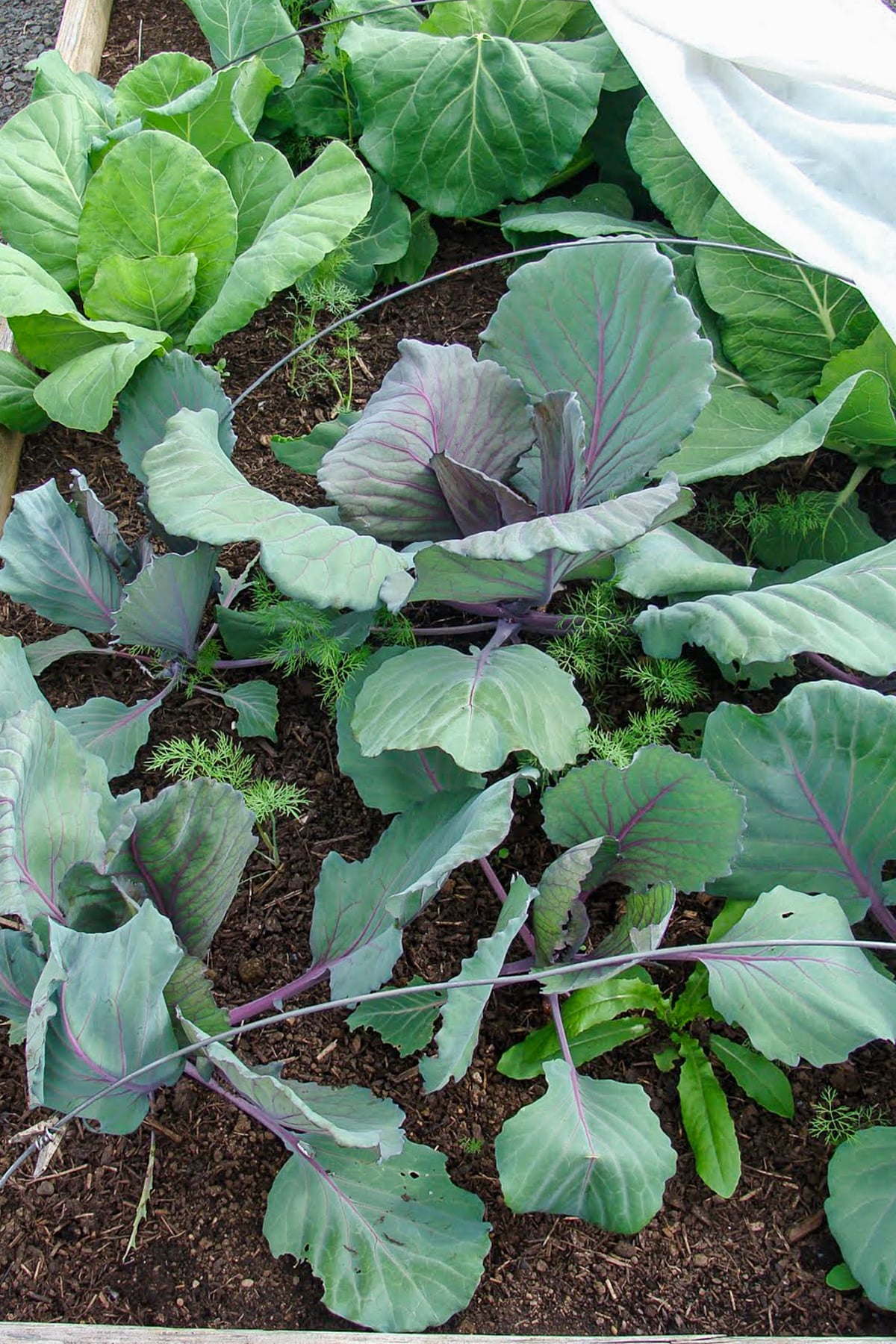
You can see that the brassicas have all loved the 5-10 degree warmth increase under the cover, putting out lots of healthy, green growth. In addition to the warmth increase, they have also been protected them from wind and excessive rain and hail we often have in the spring (and if you’re wondering, the ferny plants in between are self-seeded dill – oh, and a weed).
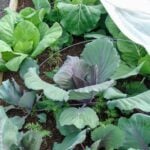
Without Covers
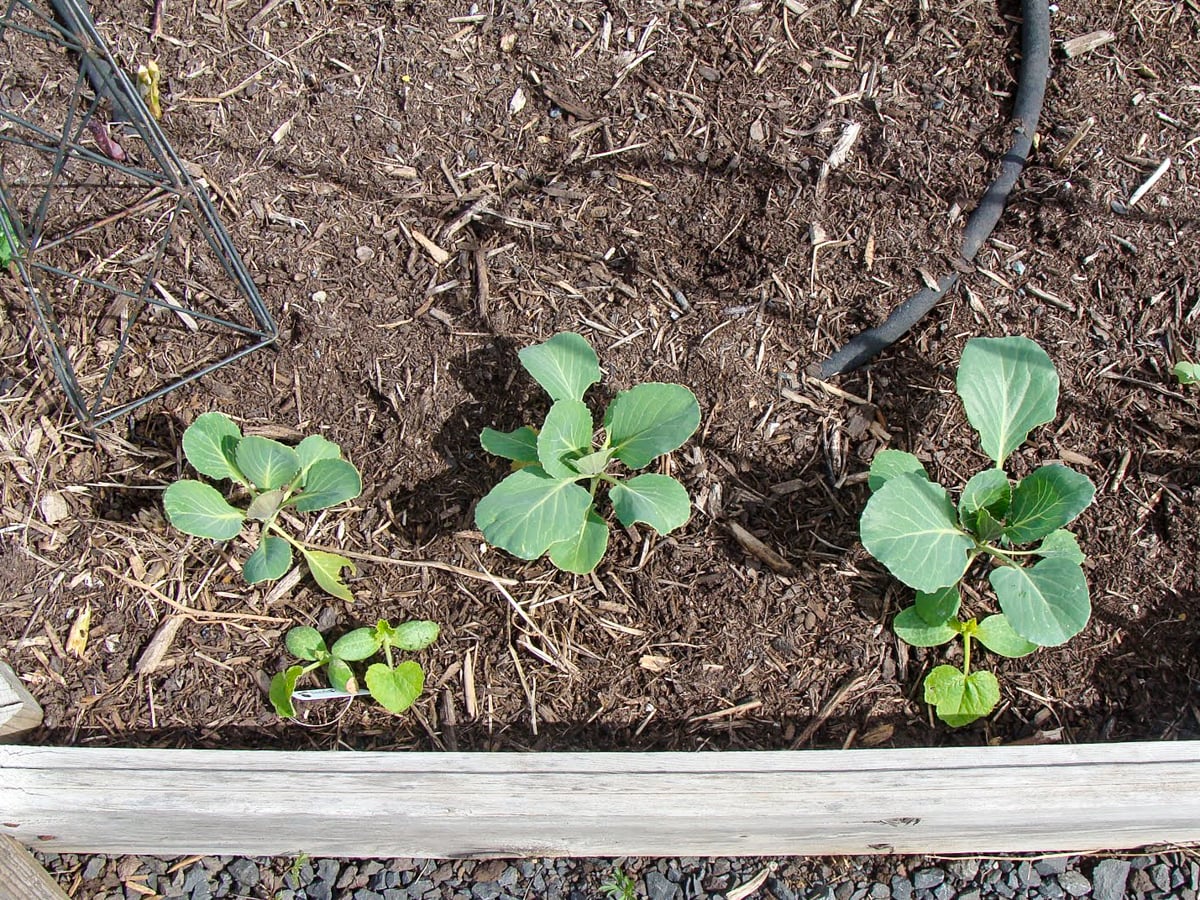
In contrast, these three little cabbages were planted at the same time as the others in the previous photo about 3 feet away. They were extras seedlings that didn’t fit in the main bed so I just found a place they could live out of the way and fend for themselves.
Isn’t the difference amazing?
Even though it doesn’t look like it, these little guys have grown a bit, and they do look healthy, but their brothers are about three to four times bigger! I promise, the only difference is the cover – they all got the same addition of compost and organic fertilizer when planting and same amount of water.
Clean Broccoli
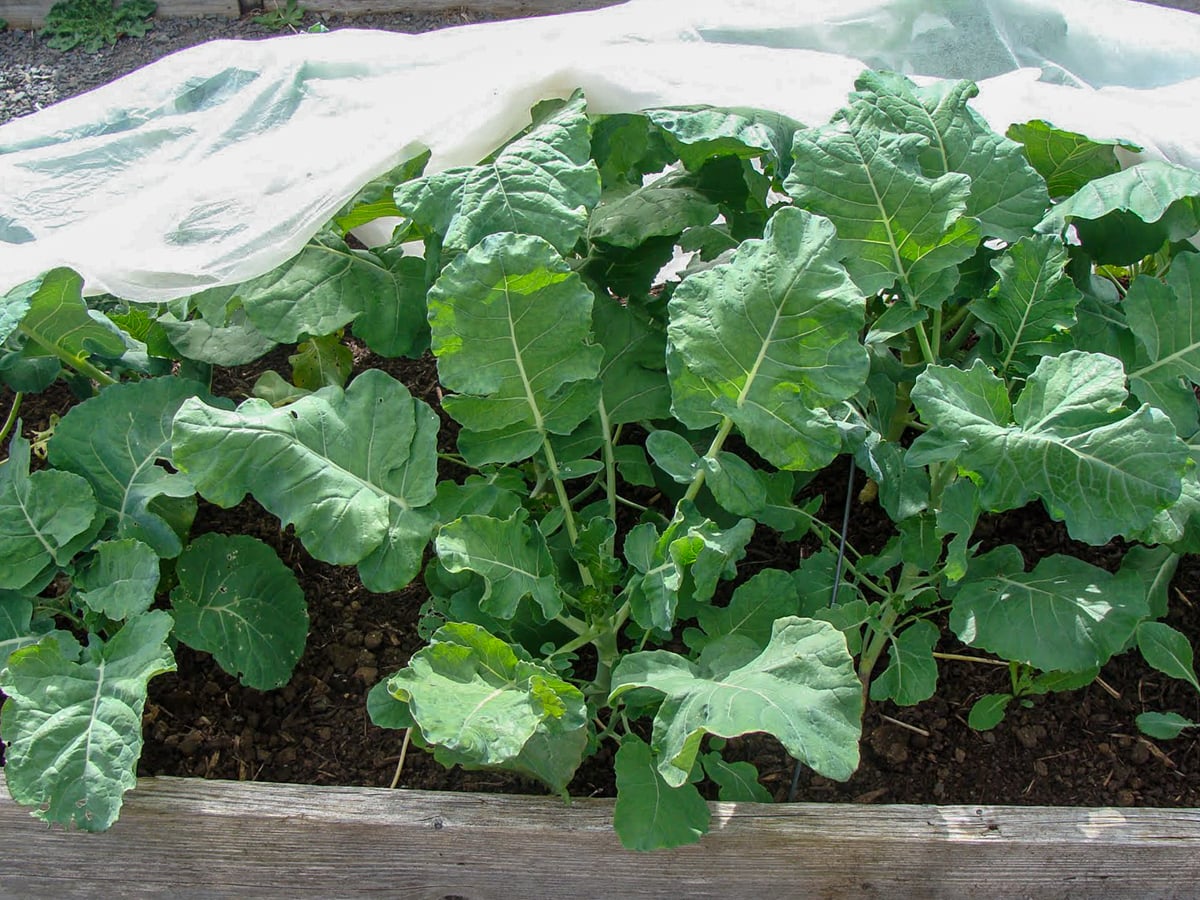
The broccoli grows more rapidly, too – these are about two feet tall and some even have little green heads starting to bud. They are healthier, with leaves free of damage from flea beetles as well as the aphids and cabbage loopers, and will produce sooner than plants grown without a cover.
You can tell they look pretty happy, right? And I’m just so thankful there’s an organic way to grow broccoli clean enough to eat from the garden!
More On Using Row Covers
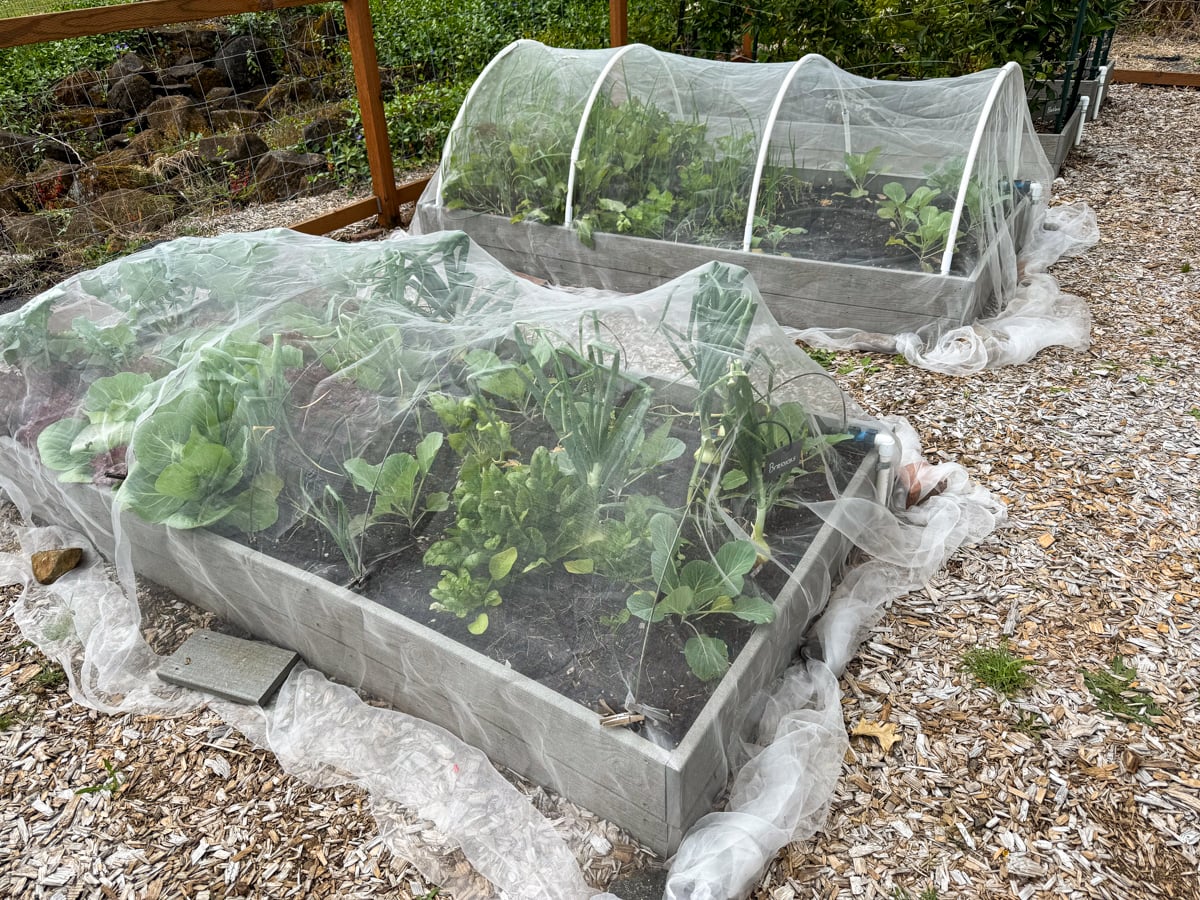
As I’ve continued to try different things in the garden, one thing I do a lot more now is to succession plant as well as plant a fall garden. Both of these mean that I need to be growing some of these cool weather crops when it’s too warm for the white row covers, even the lightest varieties.
Enter Insect Netting Row Cover.
Pictured above are beds in our farmhouse vegetable garden covered in insect netting which replaced the row covers when it started getting too warm (around mid to late June here).
I leave the insect netting on all season long now because we also deal with ground squirrels which devour any tender leaves they can find (arrrgggh). It’s a small price to pay for almost bug-free produce, though (I still have to look for slugs and other crawlies).
However, I have discovered something new against cabbage loopers that can work in densely planted beds:
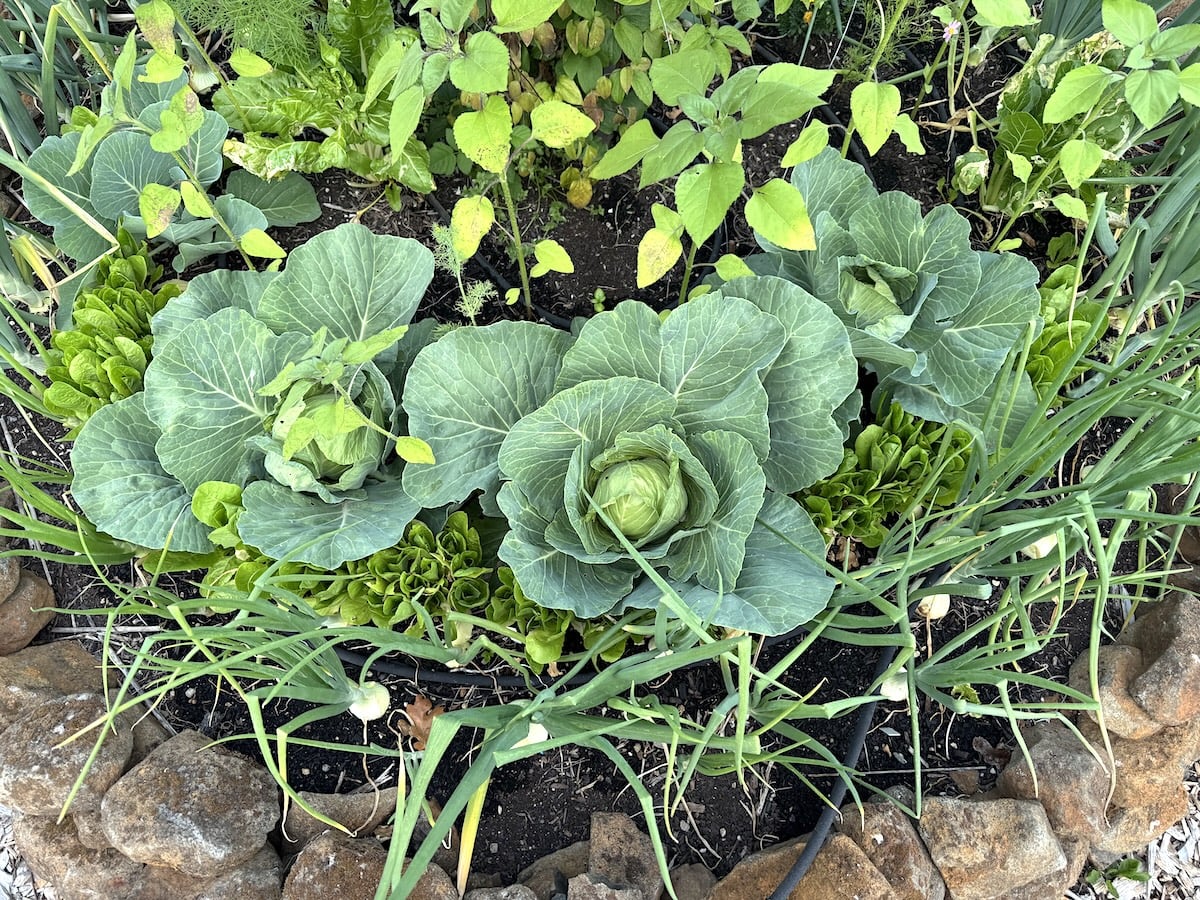
The cabbages above are growing without any cover and are bug-free because they were planted with onions surrounding them! These cabbages stayed fairly bug-free until harvest. I found only a couple loopers on the few that needed longer to mature after I harvested the onions.
While this can work in some cases with cabbages, the only real way to grow broccoli without aphids is to use a row cover.
So, what are the benefits of using row covers again?
So, to recap, I think you’ll love growing broccoli, cabbage and cauliflower under row covers because they:
- remain relatively bug-free
- mature faster
- grow healthier
- produce sooner
This article has been updated – it was originally published in 2010.
Disclosure: affiliate links in this article will earn commission based on sales, but it doesn’t change your price. Click here to read my full disclaimer and advertising disclosure.

Does rain water make it through the covers, Jami?
Oh, yes – rain and sun make it through! I think it’s some sort of ‘polyspun’ fabric or something – that’s what makes it so awesome! The row cover can work as a sun shade, too, for lettuce when it gets warm.
Do you have to put up any of these cole crops? If so, how do you do it? There are only the two of us now and I’m not sure how much of each vegetable to plant. If I plant too much to eat at once, what do I do with the rest?
I try to grow a couple plants of different varieties so they mature a couple weeks apart, and the broccoli just produces side shoots for us all season, but yes, broccoli and cauliflower both freeze well. I do still blanch these vegetables before freezing. I read once that you can freeze cabbage in a slaw and tried it, but it wasn’t a keeper for us. 🙁 Luckily, cabbage keeps months in the fridge, so it’s easy to use up for us in stir fries, roasted, slaws, etc. Hope this helps, Karen!
Hello Jamie,
Thank you for the info on row covers. I have cauliflower, cabbage and broccoli seeds planted and growing in my greenhouse. I was able to purchase row covers at my local thrift store for $2.50. Great price! Will be using them for the first time, as last year I had to throw my broccoli and cauliflower out because of the bugs. so, hoping for a good crop this season.
A very mild winter and early spring here in British Columbia Canada. Spinach, collards and gai lan all growing well in the garden, and flowers in bloom much earlier this season. Also, thanks for info on rhurbab, mine is the red one. I have kelp here, so may feed it with this and see if it grows better so I am able freeze some. Bless you for all your assistance.
That was a steal for row covers, Yonne! I know you’ll be thrilled with how they work – I had given up on growing them until I started using them. Your garden sounds lovely – I’ve never heard of gai lan, is that an Asian green for stir fries?
Hi Jami,
Yes, gai lan is an Asian vegetable. It is Chinese broccoli and belongs to the same family as broccoli and kale. It has crisp thick stems, and dark green leaves, but no head like regular broccoli.
I find it very hardy and easy to grow, and usually pick it before the stems get too tough. It’s great in a stir fry, and I like it pan fried in a little oil with finely chopped white and red cabbage and carrots. Sounds a little strange but it’s really a delicious dish.
I also blanch it and store in my freezer for later in the year, it freezes well.
Hope you get to try it sometime.
Thanks for the info- that sounds wonderful, Yonne – I’ll have to remember to look for those seeds!
I purchased the inexpensive row covers for $3 last year and they just don’t stand up to the weather. The UV rays are too strong and every one of my covers had disintegrated by August. If you know that and only use it until July, you can always purchase a new one every year for $2.50!
That’s a good tip, Paula! I order our row covers by the foot from Pinetree and they last 2-3 seasons, depending how rough I am with them. 🙂