
Why I Love Filet-Style Pole Beans (& Why Pole Green Beans Are Better Than Bush)
Find three reasons to grow poles beans instead of bush, and six reasons why tender filet-style pole beans like Emerite and Fortex are the best! These climbing beans are dependable in the garden and easy to cook with making them one of the most prolific, cost-saving vegetables to grow at home. If you want beans that truly earn their space in the garden, these varieties are hard to beat.
✩ What readers are saying…
“This year, after reading your article, I tried the Emerite beans and am so happy…I have beans to pick, finally! I love how tender and “un-stringy” they are.” -Jani
Some links in this article are affiliate links and if you click on them and purchase I will receive a small commission at no cost to you.
Note: I first wrote this article on my favorite green bean, Emerite, 15 years ago (!). I updated it in 2016, adding another variety I had started growing with the Emerite, Fortex. I’m updating again in 2026 because I now grow a third variety of filet-style pole beans. Also as a reminder, I’ve always still grown a few bush beans to harvest earlier – it doesn’t have to be an either/or! Read on for all the details!
Pole beans vs. bush green beans – on which side do you fall? When I first started gardening, I grew bush beans like everyone else seemed to. But one year I wanted a pretty bean tee-pee in one bed, so I grew some pole beans.
And wow, was I in the dark about pole beans – especially tender, stringless, wonderful French filet green beans! Here are a few things I learned in my unplanned experiment:
3 Reasons to Grow Pole Beans vs. Bush Green Beans
- Pole beans are easier to harvest than bush beans. With bush beans you have to bend over, man-handle the plant (sometimes pulling it up mistakenly), all in the effort to find those beans. Once pole beans grow, it’s just a matter of standing and picking them conveniently at your waist to head level.
- Bush beans produce for only a short period, requiring succession sowings to get beans over a whole growing season. Poles take a bit longer to get going, but they produce (mostly) for a whole season.
- Cleaner harvest – bush beans are often a lot dirtier than pole beans because they flop onto the ground (most of the time I don’t even have to wash pole beans before freezing without blanching!).
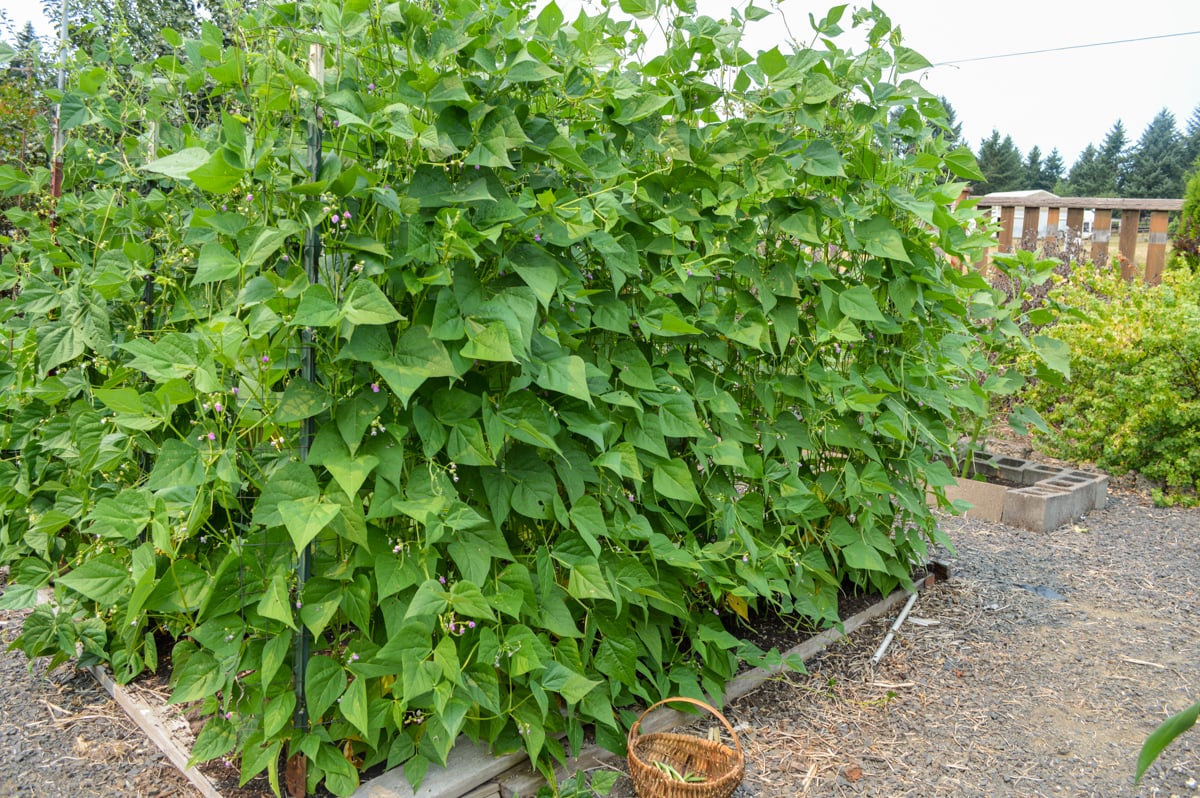
So now I plant mostly rows of pole beans, although I still plant some bush beans to be able to harvest earlier beans (pole beans take a bit longer to start producing).
Filet vs. Standard Pole Beans
Over the years I’ve tried many types of pole (and bush) beans including the super popular Kentucky and Blue Lake (and Kentucky Blue cross) varieties, but I’ve found them to be stringy and tough with inconsistent production, at least where I live. But when I discovered French filet green beans, there was no going back – they are always tender and stringless.
Out of all the varieties I’ve tired my favorite variety to grow is Emerite. I’ve grown them since discovering them years ago, even though it seems harder each year to find seed companies that carry them. (While you can save the seeds to plant the next year, we eat most of them into the fall, so it’s hard to remember to let some grow to seed-saving stage! I do try to, though.).
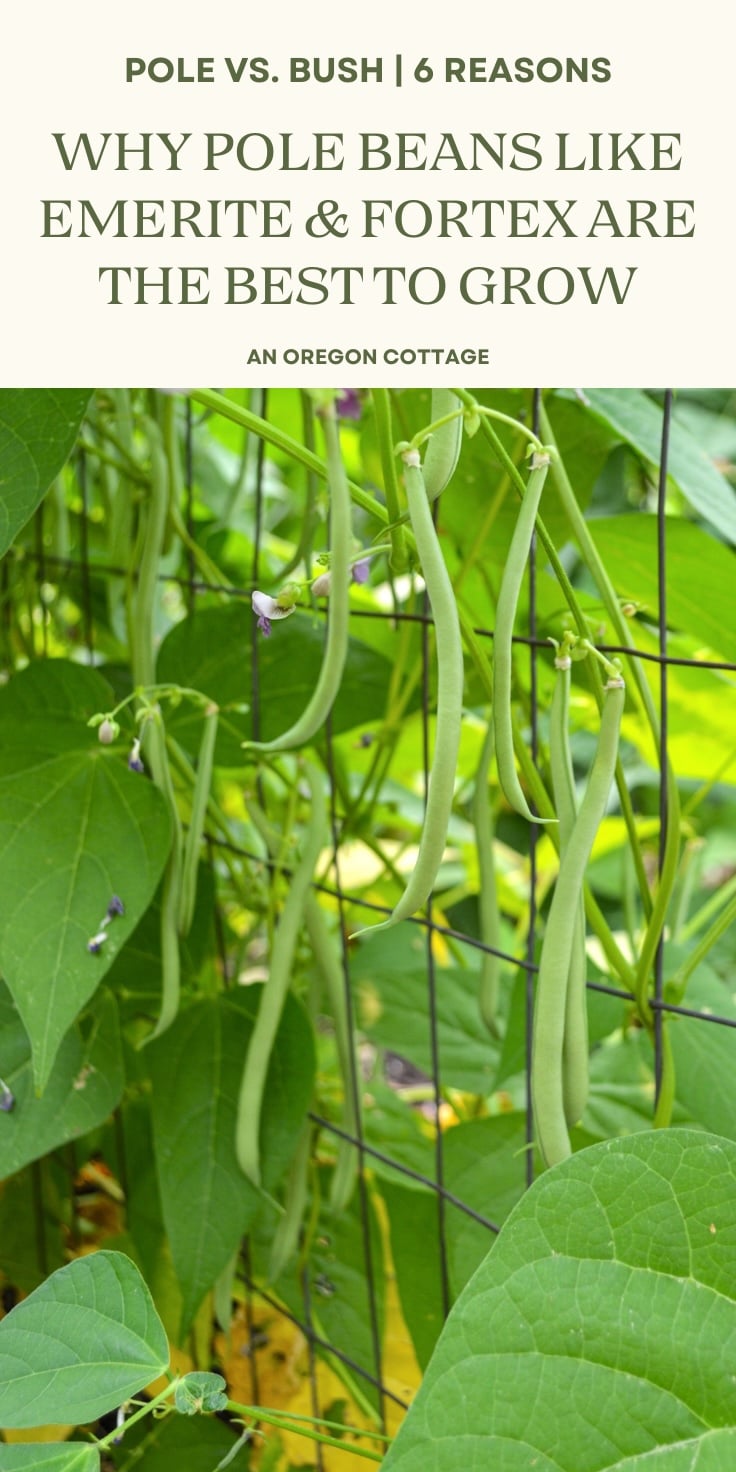
I also have started growing Fortex, which grows longer, but still stays tender, and most recently a yellow filet pole bean, Monte Gusto. I grow the three together on one 12-foot long trellis and it’s perfection in timing, harvests, and color.
But here’s the mystery to me – why don’t more people grow these beans?
6 Reasons to Grow Filet Pole Green Beans (Like Emerite, Fortex, & Monte Gusto)
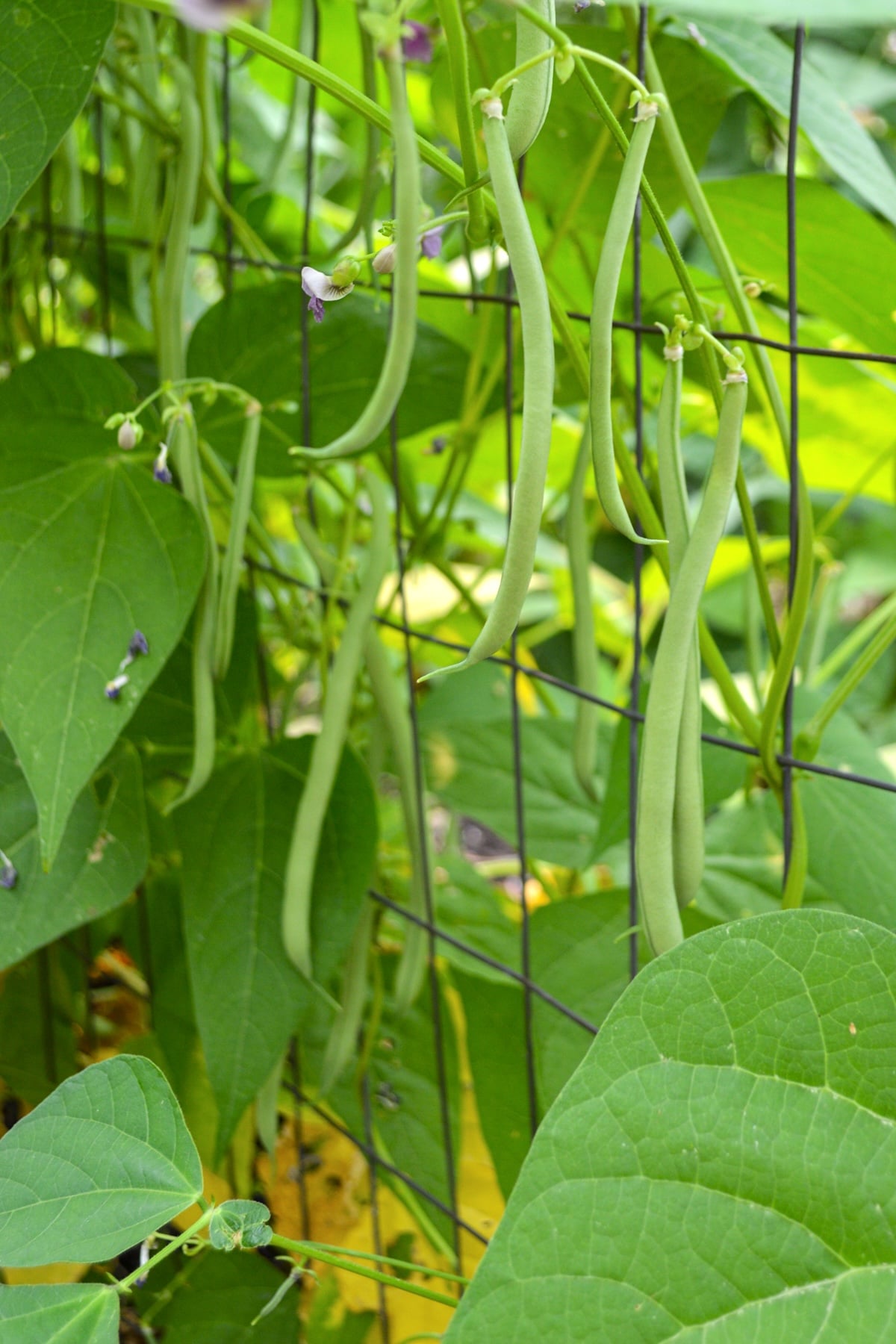
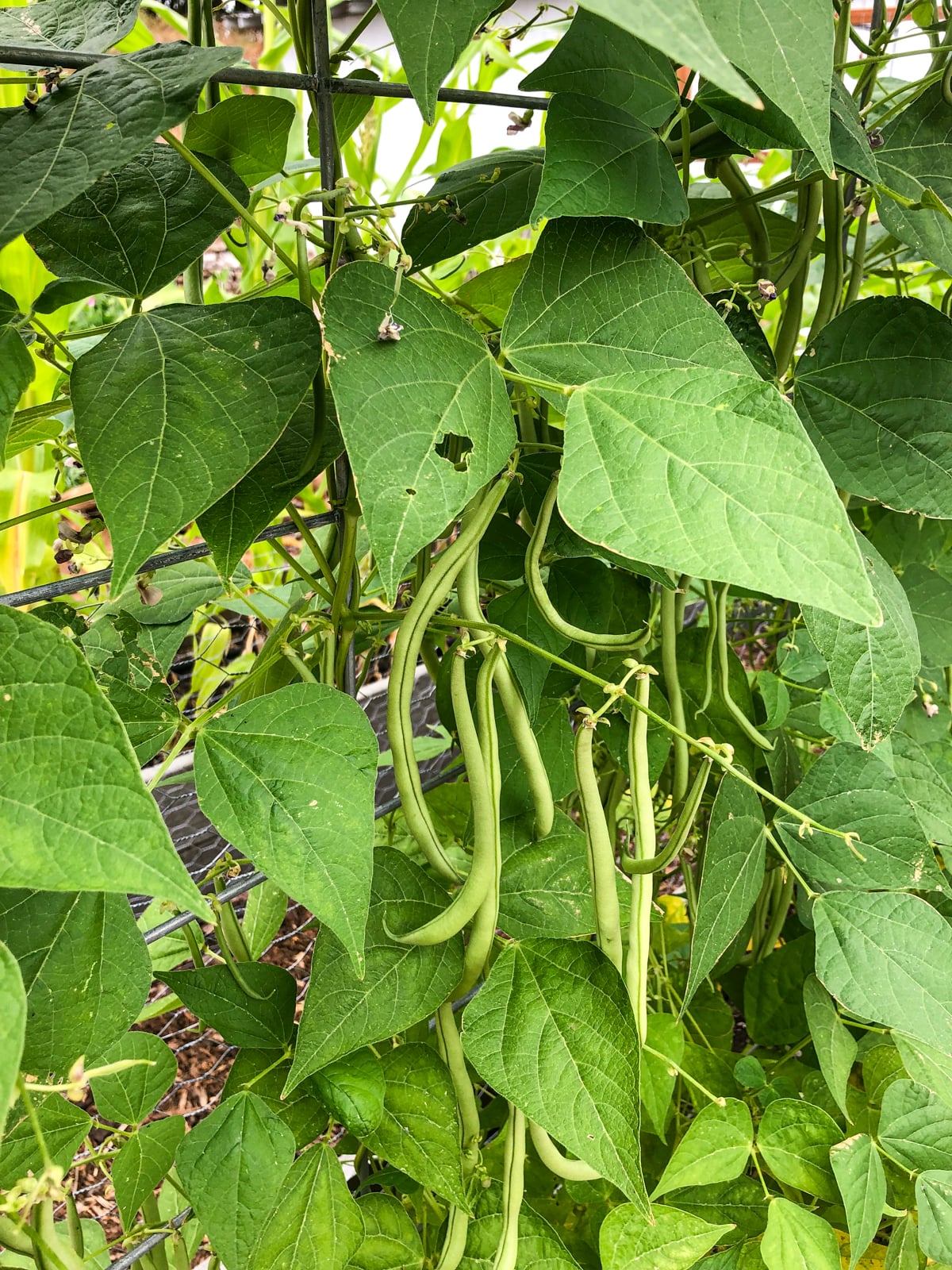
1. Filet style beans can be picked at all stages. From a 4-inch thin filet style, which is great at the beginning of the season when you can’t wait for those first beans, all the way up to a mature 7 to 8-inch rounder bean.
2. Filet beans are never stringy or tough. Even when they’ve been left to mature to a large bean. Never. (TIP: This is why I think my unblanched frozen green beans are better than blanched – I’ve always used tender filet green beans which don’t stand up to blanching like the tougher string beans do.)
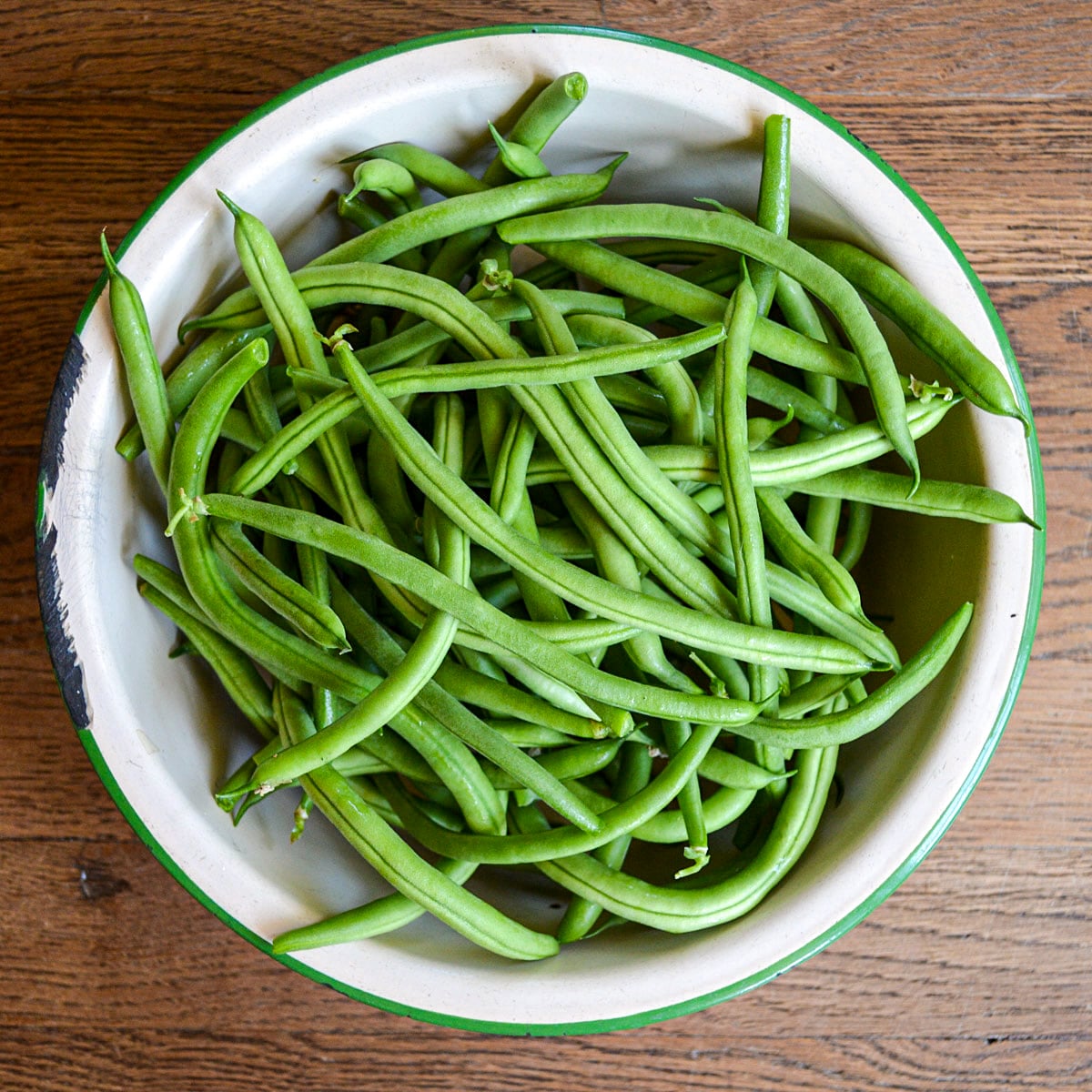
3. They produce a lot during the main season. Every year my 10 to 12-foot row has produced enough for us to eat tons of fresh (whether that is simply roasted or with caramelized onions & tomatoes) and still have 10 quart bags in the freezer for the winter.
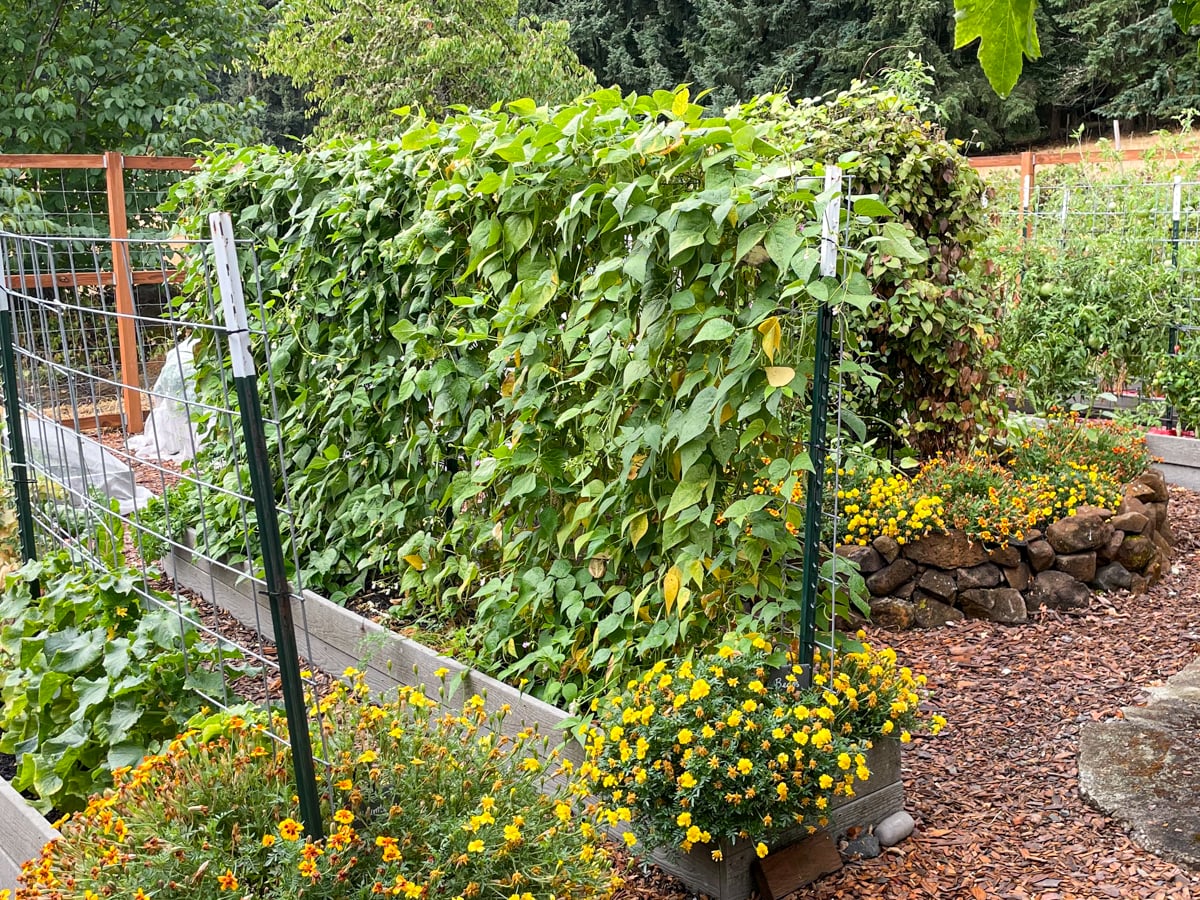
4. They produce until the frost. Emerite may slow down after the large main harvest, even losing leaves in the hot last days of August – but don’t give up on them! As soon as the weather turns “fall-ish” with cooler temps and some rain, they will start leafing out again and producing flowers and beans- all the way until the first frost. Fortex produces through warmer weather, too, and usually continues while Emerite is taking a break, making them perfect to grow together! The Monte Gusto I grow in the middle of them also seems to pick up slack when either are taking a break. I’ve found it’s really good to grow a couple of different varieties for just this reason.
And I LOVE eating fresh green beans in October! (The bush beans? They are gone. Done for. Outta here.)
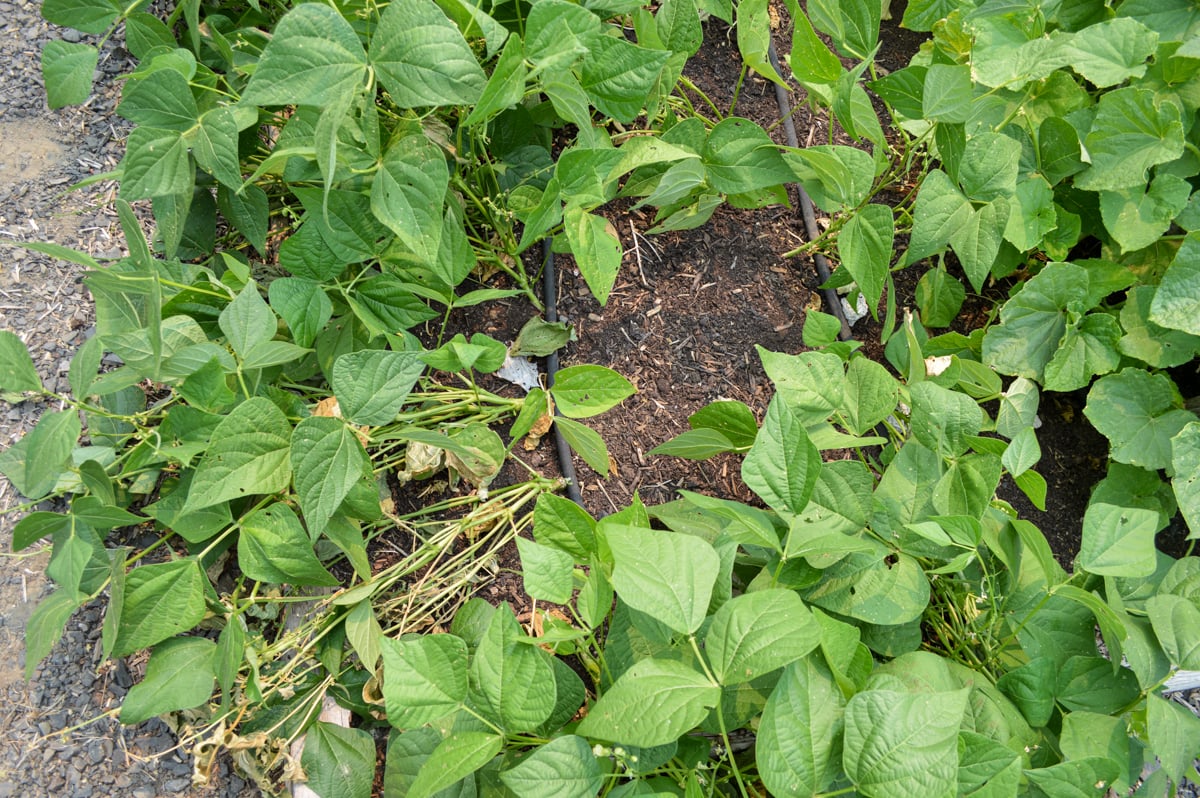
5. They are so much easier to pick than bush beans. Um, do you like to hunch over, struggling to find the ripe beans on a 2-foot tall plant- often damaging the plant in the process – or stand up and pluck the beans you can easily see are ready and hanging almost at eye level? That’s a no-brainer for me, especially with my creaky back.
6. You only have to plant pole beans once. No succession planting is needed like with bush beans. It’s true that poles take a little longer to start producing, so I do plant a few bush beans, like I mentioned, at the same time to give us the earliest harvest, but there’s just no comparison to the longevity of pole beans.
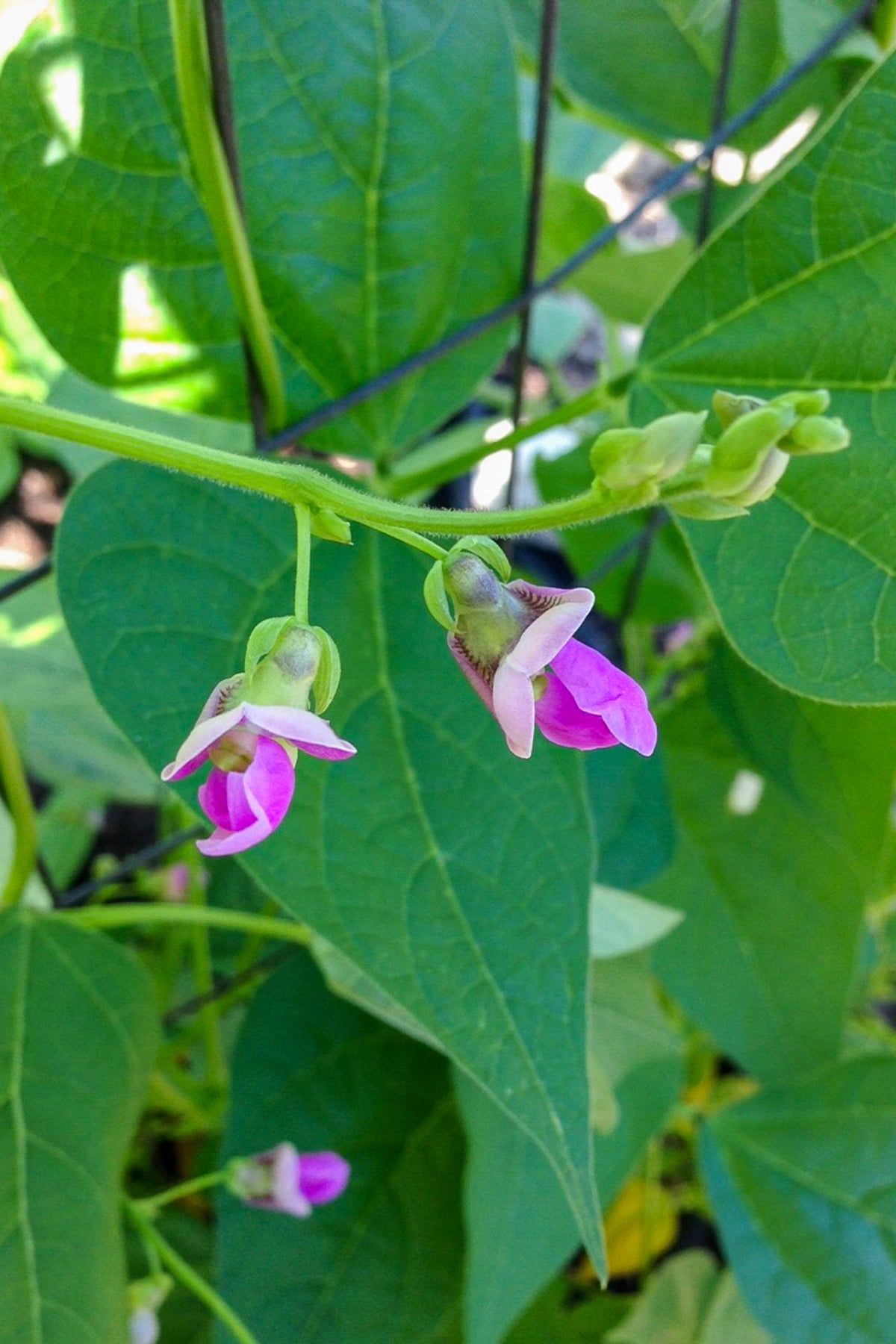
BONUS: Emerite bean blossoms are pretty!
TIP: If you’re like me and prefer tender, stringless green beans, then be sure to choose a filet variety whether you grow pole beans OR bush beans. My favorite filet bush bean varieties are Maxibel and Tavera. (I usually companion plant about 5 of these early in the garden to get a quicker first bean harvest.)
Have I convinced you to grow pole beans?
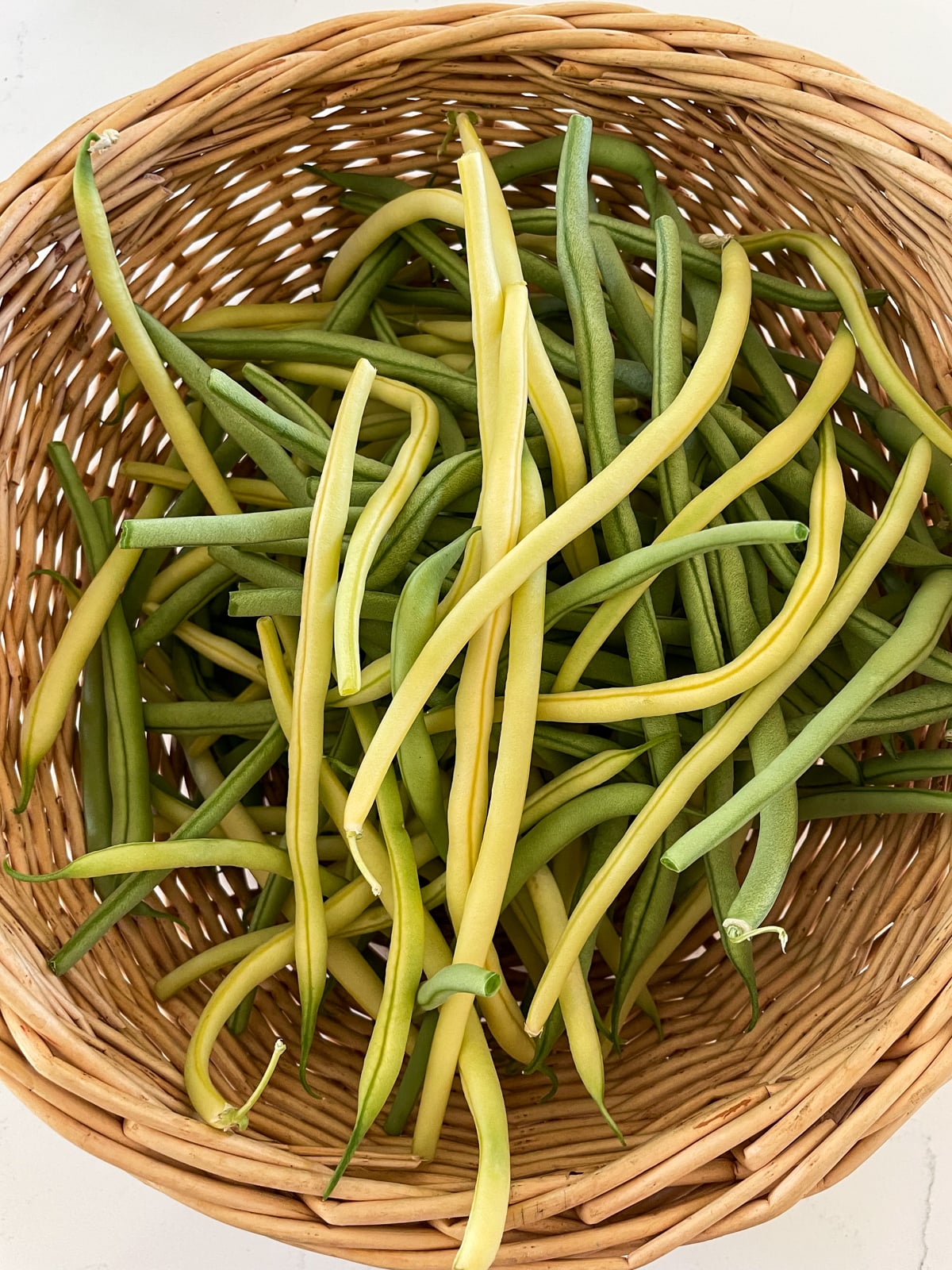
Where to buy filet pole bean seeds
I’ve also found Fortex at Pinetree Garden Seeds and Johnny’s Selected Seeds (who has Monte Gusto as well, but not Emerite). The only other places I’ve found for Emerite beans is Vermont Bean Seeds and Renee’s Garden.
More Easy Gardening Tips
- Steps to Starting a Vegetable Garden
- Organic Vegetable Gardening 101
- Simple & Easy Gardening Tips and Techniques
This article was originally published in October of 2011. It has been updated in 2016 and 2026.
Disclosure: affiliate links in this article will earn commission based on sales, but it doesn’t change your price. Click here to read my full disclaimer and advertising disclosure.

I grew Emerite french filet pole beans for the first time and we love them!! I usually grow Burpee Big Kahuna, but they tend to get tough when mature and I didn’t like the texture after blanching and freezing sometimes. I thought a french bean may be better. I wish I could recall where I purchased the seed, I’ll have to find the package. My daughter loves green beans now, but the only way she likes them is sauteed in butter and garlic. I actually started a second succession planting the end of July, which got me a few more beans in zone 7a. I should have started in early July to get a decent amount. I know for next year! I love the purple seeds and flowers as well.
I’m so glad you tried them, Jen! I think they are the reason it was one of only a handful of vegetables my daughter liked when she was little. They are so tender and never stringy. I can still find the seed, it’s just less and less. We were hit with an early freeze here (almost a month early), so I didn’t get as many seeds saved as I normally do so I will be looking next spring for seeds I think. I think the plant is pretty, too, with its purple flowers. 🙂
I LOVE Emerite Pole beans as well. I’ve been growing them for about 12 years and I’ve never looked back. I plant a 50 foot linear row of them and I harvest about 120 lbs per season. I live in Manitoba, Canada, so my growing season is much shorter, but I’ve found that these beans start producing mid-July and keep going right through to frost. They are long and if left to get a bit bigger, they are perfect for blanching and freezing. They retain their shape and don’t “mush” like many of the bush beans I’ve grown and blanched in the past. I like to harvest enough beans to keep us going right through the long Canadian winter, so I put about 100 lbs of beans in the freezer each year. Thank you for writing about these beans. I too, have found that they are not being given the fan fare they deserve and the seed is becoming more difficult to find. Happy growing!
Yay! Nice to know there’s another Emerite lover out there. 🙂
This year was the first year we actually got beans to grow! I don’t even eat green beans, but my family like them so I planted 2 rows of bush beans. They did great until they were infested with all kinds of pests. It looked like every possible bug was eating them. We got enough for a few meals and maybe 2 quarts for the freezer before I gave up and tore them all up. I live in the southeast where we have a long growing season, so I’d like to plant more. I haven’t been able to find seeds, so I may plant something else instead and try pole beans next year. You are right about bush beans being a pain in the back! I tried getting my 3 small grandchildren to help pick, but they saw bugs and didn’t want anything to do with the whole thing. Do you do anything to keep yours bug free? I have tried peppermint sprays, a concoction of onion, garlic and mint, but nothing worked. I would love any tips y0u have for keeping bugs off organically.
Oh, that is frustrating about the bugs, Barbara. Even though it sounds like you tried something similar, the garlic-mint spray that I make has worked wonderfully on our beans as well as our basil (you can click on the link from that page to the FAQ and hear how it’s worked for others, too).
I’ve also used sticky traps (just stakes in the ground next to the plants of yellow squares covered in a sticky goo) to catch them, and Bt as a last resort (though still organic).
I just saw on Territorial Seed’s website that they have seed for Fortex beans — yay! I’m still going to see if I can grow some of each of these. Garden planning…gotta love it!
Wonderful – it’s the combo I love now, too Beth!
For more than 30yrs it was regular bush beans or filet bush which i like best. This summer I planted a 10ft section of pole beans and now wonder where my head was at all those years. From now on only pole beans and FORTEX filet at that. Nice article thanks.
Yep, I totally hear you, Daniel! And I do like Fortex, but have you tried Emerite? I find them a bit more tender though I do grow them both. 🙂
Great article on pole Beans. I have grown french filet bush beans for years, but the last five years, I have put more attention toward Pole Beans, and like you, Emerite were always my favorite, and I also discovered Fortex some years ago as well. And like you, why bother to bend over to pick bush beans when you can reach up and easily pick pole beans? However, this coming year, the only Pole Bean I will plant, will be one called “Caramint”. Why? If both “Emerite and Fortex” get lost in the poles and leaves and get old, they are not the best to eat, while, “Caramint” which is a bright shiny purple, grows easily to 12″ long plus, is so easy to recognize amongst the green leaves, and never, ever tough! When cooked, they are a nice dark green. Additionally, if one plants any beans in succession crops, every two weeks, you will have fresh pole beans all summer, not just all at once. You know this, just passing it along to your readers. Cheers!
I misspelled the purple pole bean :Carminat”, available from Burpee/Vessey’s, etc.
🙂
That variety sounds amazing, Frank!! I’m going to have to try it – along with Emerite, of course. 😉 Thank you!
Oct 2017
Hi Jami,
I picked up Emerite beans at our nursery this spring and was pleasantly surprised. I am a huge fan now and will plant from seed this year and take your advice to add Fortex. Thanks for the info on harvest time because I suspected I could have kept the plants into the fall season, alas, I had not this year.
Yay! I’m actually glad to hear you found them at a nursery – they’re harder to find and I’m hoping they don’t stop producing them!
On your recommendation, I grew the Emerite pole bean this year. I have always grown pole beans, primarily the Asian long bean types. Thank you so much for your article, and for introducing me to the Emerite. I will always have a place in my garden for this fantastic bean which is beautiful to look at, delicious, and amazingly productive.
I’m so glad you tried it, Maureen, and that you see how great it is, too! More people to get the word out. 🙂
Your recommendations…are they good canners? I only saw you mention freezing.
I have pressure canned them in the past and they worked great (we just don’t prefer beans preserved that way). I do regularly pickle them, though (the recipe is on the site, with pictures showing them pickled), and they are also good this way.
This year I planted pole beans for the first time and am so happy with them! I will not go back to bush beans again…. well, mostly…. I do have some bush container beans on my patio. I couldn’t just go cold turkey, you know. ^_^
My beans went in a little late and I am still waiting on my Emerites to get big enough to pick. I wanted to mention another pole bean that I am harvesting now: Spanish Musica. It is a little different that the regular-shaped filet bean with a wide, flat bean growing 7 to 9 inches long. My daughter pronounced it “amazingly delicious”! They are good cut into pieces and steamed, or … my favorite…. blanch and toss with a balsamic vinaigrette and fresh tomato wedges for a different kind of salad.
Sounds wonderful, Erin – thanks for that suggestion! I love bean salads in summer, too. And, yeah, I still usually grow a bush or two of beans to try and get them as early as I can. 🙂
I agree with you completely! The Emerite is FANTASTIC!! I haven’t had a garden for the past 5 years due to traveling abroad and am now finding it quite difficult to find the seeds. Thank you for posting where to find them. I also look forward to trying the Fortex. Happy! Happy!
Yes, they seem to be getting harder to find, Sunshine. You might want to let some go to seed in the fall so you can save your own seed. I started doing this the last few years, because I do not want to be out of this variety. 🙂
Thank you for this info! This will be my first year trying pole beans. My dad (a master gardener of over 50 years gardening) has never grown pole beans! I’m trying Emerite. ? Are they an heirloom? Have you had good success the years you’ve saved their seeds?
Yes, they are an heirloom Jennifer and I’ve saved the seed from year to year easily. The last few years especially, because they seem to be hard to find or sell out quickly. 🙂 I hope you find them as wonderful as I do!
I have a question for you! On two occasions in the past I planted pole beans and was terribly disappointed. In fact, we only ate two meals of them. Here’s the problem I had: When I planted bush beans, I could always tell when they were ready by the size of the pod. But with the pole beans, when they looked big enough to harvest, they were absolutely tough and stringy! Just awful! If I picked them when the pods were smaller they were more tender, but the beans inside them were so tiny that I felt we weren’t getting our “nutrient load” from them. Any suggestions or advice?
Hmm, I don’t think you need to wait until the beans inside are big, Sandy – that’s always a sign they are past fresh eating to me and I should let them mature to dry beans. The French filet beans like Emerite and Fortex that I grow are meant to be picked small, though you can pick them larger and they will still be tender. This is how they are harvested for green beans you buy in the stores – fresh or frozen- and they are still very nutritious. 🙂
Just ordered these seeds to try in my 2017 garden. Thanks for the blog. I thought you’d like knowing that it is still relevant 7(?) years plus after posting!
Wonderful, Michelle – they are still my favorite!! I hope you enjoy them, too.
Emerite has a yellow cousin (also pole bean) called French Gold Filet from France
True “Haricot Verts” Beans
Oh, I’ll have to look for that, Sylvia! I tried a pole bean labeled ‘gold filet’ last year and it was NOT. Thick, tough beans. 🙁 Nice to know there is actually one.
I definitely fall in the pole bean category although we have had this Rust Fungus in our garden the last two years Which has meant that we’ve only had a very short season before having to destroy the plants. ☹
Ack, seriously? That would be frustrating – I hope it doesn’t make it’s way here!
Jami, I’ve followed your recommendation for Emerites and have had great success for two years. I had major problems with stringy beans before switching – they were basically inedible. I have had luck also with Blue Lake S-7. I still favor Emerite, but the S-7 is not stringy and actually does better than Emerite towards the end of the season here in Philadelphia. I harvested from mid-July into October (no real frost until November; very warm fall) although production slowed near the end of September. I planted 12 ft of beans and harvested 47 pounds.
Jung has Blue Lake S-7 and also carries fortex. Be sure to get the S-7 and not just any Blue Lake.
Thanks for the tip, Mike! I actually haven’t heard of Blue Lake S-7! I wonder what the difference is – like why wouldn’t they have just named it as a different variety?
I did some internet searches. It looks like the S-7 was developed to make the Blue Lake stringless. I had planted Blue Lake the previous year and it certainly had strings. Not sure why they still sell it. By the way, trying to find out who developed it was not easy. There is a reference to Asgrow seed company, which is the seed company for Monsanto – not a plus in my view. They seem to be big in soybeans.
Hmmm, that is interesting, Mike. Thanks for checking that out! Maybe that’s a reason to get open-pollinated seeds when possible. 🙂
I’m curious if you grow a tee-pee of fortex and one of emerite beans near each other (like maybe 5 feet apart), would you still be able to save seeds that are true to type from each variety or would they cross?
You know, I don’t know, Kathy! I do grow them right next to each other (in rows now) and I know that Fortex is open pollinated, but I haven’t done research to see if that would be a problem.
Thanks for your reply. I was just curious if you ever noticed any weird stuff come up from saved seed since you grow both. I’ll probably give it a try just to see… at least if I can bear letting any go to seed! 🙂 We grew emerite last year (based on your recommendation– thanks!) and are trying fortex this year, along with a couple of others. Hooray for beans!!
This post was really exciting. I haven’t quite figured out how to have a garden – I live in the desert southwest (and boy do I miss Oregon!!!) and I’m not sure what to do with our ridiculous heat. Definitely want to grow those pole beans when I get that sorted though – I’m convinced!
Hmmm, that will be tough, Heidi – obviously you need to grow in the fall, winter, and spring, right? I think Fortex might be better where it’s hot than Emerite, though, since it’s during the hot times here that Emerite slows down. I visited an amazing vegetable garden when I was in AZ, though, so I do know it’s possible! Here’s the post I wrote on it, in case you’re interested: https://anoregoncottage.com/arizonas-agritopia-tuesday-garden-party/
Do you think they would work on a fence?
Yes, though they will get taller than 6′ – I just let them bend over and grow back down. 🙂